The Problem
The traditional approach to sobriety often looks like this: admit you're broken, fight your urges every day, and measure progress by how long you've successfully battled your own nature.
Some people make that work. Most don't.
If you've tried to get sober before—maybe multiple times—and it didn't stick, the problem might not be you. It might be the system you were using.
The Shift
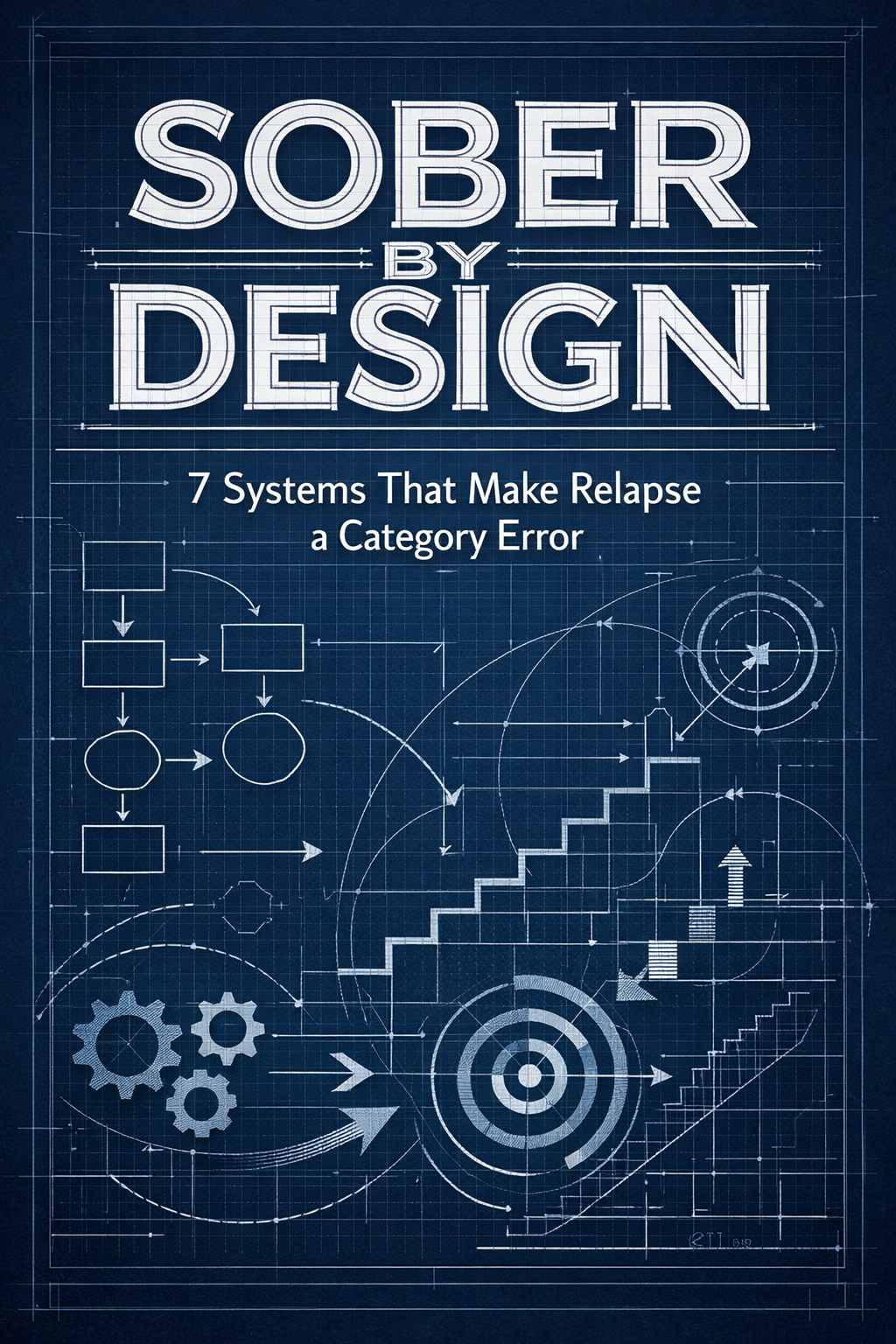
Sober by Design takes a different approach.
Instead of treating sobriety as a war against yourself, it treats sobriety as an engineering problem. You're not broken. You're running a system that isn't set up to succeed.
The answer is not more willpower. It is better architecture.
The 7 Systems
- System 01 Identity as Infrastructure Stop calling yourself an addict. Build a self where drinking doesn't fit—not because it's forbidden, but because it's incompatible.
- System 02 Environment as Attack Surface Every drinking buddy, every late-night scene, every old routine is a vulnerability. Learn to close the ports instead of guarding them.
- System 03 Cognitive Offloading Cravings mutate when they stay in your head. Get them out—onto paper, into voice, to another mind—where you can inspect them instead of being consumed by them.
- System 04 Data, Not Moral Failure Bad days aren't proof you're broken. They're data points. Kill the shame spiral by treating setbacks as information.
- System 05 Time-Boxed Focus Idle time is where addiction writes its best stories. Keep the next action always visible. Starve cravings of the empty space they need.
- System 06 Meaning Replacement You can't just subtract—you have to redirect. Dopamine will flow somewhere. Route it through creation instead of destruction.
- System 07 The Clarity Rule The meta-system. Anything that degrades your ability to think clearly is hostile. Substances, people, situations, mental spirals. No exceptions.
Each chapter gives you the principle, the practical application, and one concrete action to try.
Is This For You?
This is for you if
- Traditional recovery approaches didn't stick
- The "powerless over addiction" framing feels demotivating
- You think better in systems and frameworks
- You're in early sobriety and need structure, not inspiration
- You want sobriety to be the default—not a daily battle
This is not for you if
- You need a medical detox guide
- You want a spiritual or 12-step framework
- You need someone to tell you drinking is bad
What You Get
Sober by Design (PDF)
The complete book. ~7,000 words. No fluff - just the seven systems and how to use them.
You're not fighting who you are. You're building who you're becoming.
Now go build.
Questions
Is this a replacement for professional help?
No. If you need medical detox, therapy, or professional support, get it. This book is a framework for building sustainable sobriety—it's not medical advice and doesn't replace qualified care.
Will this work if I've tried everything else?
Maybe. If traditional approaches haven't worked for you, a systems-based framework might fit how your brain actually works. But there are no guarantees—this is a set of tools, not a magic fix.
How is this different from AA or 12-step programs?
The 12-step model centers powerlessness and spiritual surrender. This book centers agency and system design. Neither is wrong—they're different operating models. This one might fit you better if you think in frameworks.
I'm not an alcoholic—does this apply to other substances?
The systems are substance-agnostic. Identity, environment, cognitive patterns, time structure, meaning—these apply whether your problem is alcohol, drugs, or other compulsive behaviors.